Introduction
Packaged food carries some of the most standardized labeling requirements of any product category, which is actually good news. Once you understand the required elements, building a compliant, attractive label becomes a matter of good layout rather than guesswork.
1. The Nutrition Facts Panel
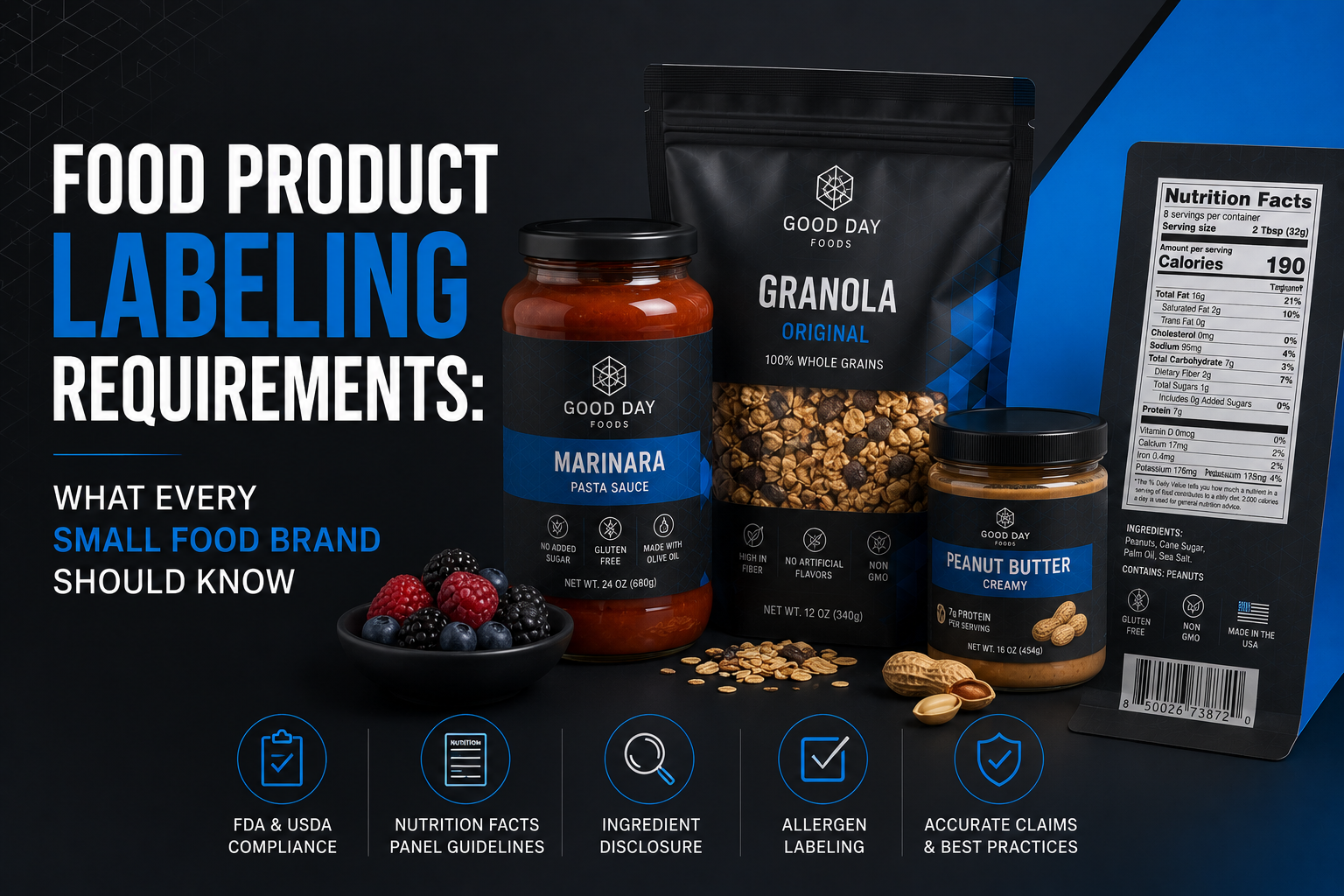
Most packaged foods sold at retail require a standardized Nutrition Facts panel showing serving size, calories, and required nutrients in a specific format and order. The format is strict, but that also makes it one of the more straightforward panels to build correctly.
2. Ingredient List Order and Allergen Declarations
Ingredients are listed in descending order by weight, and major allergens (like milk, eggs, tree nuts, peanuts, wheat, soy, fish, shellfish, and sesame) need to be clearly declared, typically in a “Contains” statement beneath the ingredient list.
3. Net Weight and Business Information
Labels need to state the net quantity of contents and identify the manufacturer, packer, or distributor with a name and address, so the product can be traced back to a responsible business.
4. Front-of-Package Claims
Terms like “natural,” “organic,” or “non-GMO” each carry their own rules and, in some cases, certification requirements before they can appear on packaging. Check the specific requirement behind a claim before designing it prominently onto your front panel.
5. Barcode and Batch or Lot Coding
A scannable barcode is close to a retail requirement rather than a legal one, and batch or lot coding helps with recalls and inventory tracking as your production scales.
6. Design That Sells on a Crowded Shelf
Once the required panels are accounted for, the rest of the label is where your brand gets to compete visually. Leading with a clear product name, appetite appeal, and a distinct color story matters as much as the compliance copy underneath it.
From Compliant Layout to Finished Label
We can build your Nutrition Facts panel and required copy into a layout from scratch, or take a panel your co-packer or consultant has already generated and design or print around it.
Packaging and labeling regulations change frequently and vary by state. This article is educational and general in nature, not legal advice. Always confirm current requirements with the relevant regulatory agency or your compliance counsel before finalizing artwork.
Final Thoughts
Food labeling requirements are detailed but well documented. Confirm current federal and state requirements for your specific product with the FDA, USDA, or your state health department before finalizing your label copy.
We hope that you enjoyed this article on food product labeling requirements. If you did and are hungry for more then be sure to check our Industry Packaging Guides articles as we try to provide new helpful content each week. Also be sure to follow us on Facebook and LinkedIn.